
WE HELP TRADIES BUY INVESTMENT PROPERTY WITH SUPER
Buy Your First
Property With Your SMSF
Super Build helps everyday tradies and FIFO workers use their self-managed super fund to buy investment property. Securely, legally, and without touching your cash.
You’ve put years into your trade. Now it’s time for your super to start working just as hard.
How Buying Property With
Your Super Works with SBP
SuperBuild Property helps you through every step of buying property with your super. We connect you with trusted experts, like accountants, financial advisers, property lawyers, and mortgage brokers, so your investment follows all the rules and gives you the best results.

COMPLETE YOUR NO FUSS FREE ENQUIRY HERE

CONNECT WITH A FULLY LICENCED FINANCIAL ADVISOR

SUBMIT YOUR DETAILS

SUBMIT YOUR DETAILS
Important Note: SuperBuild Property coordinates administrative processes and facilitates connections with these licensed professionals. We do not provide advice on whether SMSF property investment suits individual circumstances, which properties to purchase, or projected investment outcomes.
All investment decisions require professional advice from appropriately licensed advisers who can consider your complete financial situation, objectives, and risk tolerance.
WHY SUPERBUILD?
We Speak Your Language
And Know the Rules.
Freedom Super Build was built for the workers who keep Australia running.
We’ve partnered with licensed SMSF specialists and property professionals who handle every detail from fund setup to settlement, so you stay compliant and in control, with a clear path from super balance to property ownership.
Eligible Properties:
Residential investment properties
Commercial real estate properties
Business premises - with condition
Agricultural land (non-farming)
Key Restrictions:
No personal use or benefits
Cannot be lived in by members
Arms-length rental rule required
Sole purpose test compliance
2025 Requirements:
Enhanced ATO reporting levels
Stricter LRBA investor conditions
Updated valuation regulations
Compliance audit focus areas
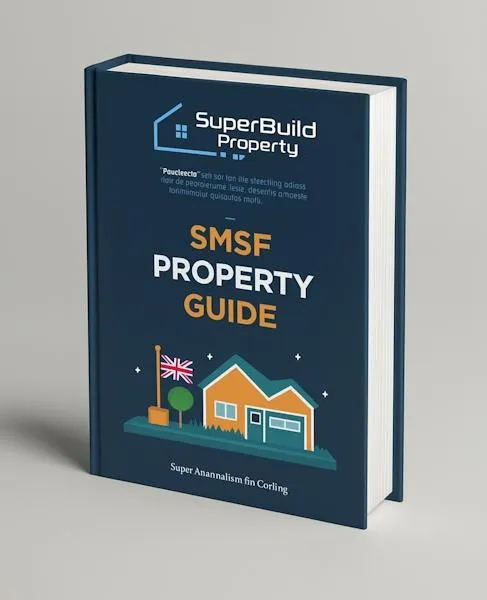
Download Your Free SMSF Property Guide
Download the complete guide that's helping Aussie tradies and FIFO workers buy their first investment property through super.
Step by step SMSF setup Process
Borrowing power calculations
Why it matters for tradies
Compliance and tax benefits explained
How you can get started today
STILL NOT SURE?
Frequently Asked Questions
Can I use my super to buy an investment property?
Yes, you can use your Self-Managed Super Fund (SMSF) to buy investment property in Australia. However, strict ATO rules apply including the property must be for investment only, cannot be lived in by fund members or related parties, and must comply with the fund's investment strategy. Professional coordination is essential to ensure compliance.
What are the risks in SMSF vs outside of SMSF of buying property?
Risks in SMSF -
Limited Liquidity & Cash Flow Pressure: Property is illiquid, making quick sales difficult to access funds (especially in retirement phase). Vacant periods can strain cash flow, as the fund must be able to cover operational expenditure and loan repayments.
Borrowing Restrictions: Borrowing inside super requires a Limited Resource Borrowing Agreement (LRBA), with stricter lender requirements, higher interest rates, and no personal guarantees allowed beyond the asset.
Higher Costs: Additional setup, loan, audit, and ongoing fees compared to standard mortgages.
More Regulatory Compliance: Strict ATO rules on acquisitions, usage (e.g., can't live in or rent to relatives), and annual audits; non-compliance risks penalties or loss of tax concessions.
Tax Implications/Treatment: Concessional rates (15% on income, 10% after CGT discount), but funds are locked up upon retirement; breaches can trigger significant penalties.
Less Flexibility: Can't use the property personally, limited diversification (property dominates fund), and restricted ability to renovate the property whilst it's an encumbered.
Risks Outside SMSF -
Generally fewer restrictions, but higher personal tax rates on rental income and capital gains (up to 45% + Medicare levy), potentially greater negative gearing benefits, and far greater discretionary choices regarding your property.
Can I use my super to buy a house?
Yes, you can use your super to buy a house, however it must be for investment purposes only. This means you'll need to rent the property out to tenants - you can't live in it yourself while it's owned by your SMSF.
Here's what you need to know:
- You'll need at least $180k - $200k in your super to get started
- The house must generate rental income for your retirement fund
- You can borrow up to 80% of the purchase price through your SMSF
- You cannot live in the house while your super fund owns it
- Your family members also cannot live in the property
The good news: When you retire, you may be able to transfer the house from your super fund to yourself personally, then live in it as your home.
Before you start: SMSF property investment has strict rules and significant costs. It's essential to get professional advice to ensure you're making the right decision for your situation. You can connect with a licensed, compliant and experienced financial adviser via the links on our page.
How much super do I need to buy an investment property?
Most SMSF property purchases require a minimum of $180,000-$200,000 in superannuation, though this varies by property price and loan requirements. With SMSF loans (LRBAs), you can borrow up to 80% of the property value, but you need sufficient funds for deposit, stamp duty, and ongoing expenses.
Is buying property through super worth it?
SMSF property investment can provide significant tax advantages, including concessional tax rates and potential tax-free income in pension phase. However, it also involves additional costs, compliance obligations, and investment risks. Professional advice considering your personal circumstances is essential.
Can I live in my SMSF property when I retire?
You cannot live in your SMSF property while it remains owned by your SMSF, even after retirement. However, you may be able to live in the property if you transfer it from your SMSF to yourself personally through an in-specie benefit payment, effectively making it your primary residence.
This transfer process is best explained by a licensed financial adviser which we can connect you with directly via the form on this page.
Can I live in a SMSF property?
No, you can’t live in a property owned by your Self-Managed Super Fund (SMSF) whether it’s a holiday home, investment property or your primary residence. It’s always important to remember that the property has to be used for investment purposes and is ultimately designed to provide you retirement benefits just like any other investment inside super, as opposed to you being able to live in it and enjoy the benefits today.
Please note that currently there is an exception to this regulation with Business Real Property which can be purchased by the SMSF and used in a personal capacity today even if you’re not retired.
Can my family / parents live in the property?
Unfortunately your parents and relatives can’t live in property owned by your Self Managed Superannuation Fund, as these categories of people are classic examples of what’s referred to as Related Parties which also carry a host of other issues as well.
A main concern from the Australian Taxation Office’s perspective is members using concessionally treated tax monies inside superannuation to help family members in obtaining an early present entitlement to these monies instead of them being used for member retirement purposes as they should be. A good rule of thumb is to rent out the property to complete strangers at market rates.
Can I renovate the property?
Renovating property inside a SMSF is a complex and technical affair for which it’s strongly encouraged to seek professional, qualified and independent advice before undertaking any renovations for risk of breaching the Superannuation Industry (Supervision) Act 1993 (SISA).
If the property inside your Self-Managed Superannuation Fund still has a mortgage associated with it i.e. is an encumbered property, then in almost all circumstances it would be a breach of legislation to make significant improvements to the dwelling which can result in severe consequences, such as the fund being non-compliant as well as other significant fees and penalties.
Can I buy any property I want?
Pretty much yes, however there are very important factors to be considered first such as is the property already tenanted? Does it need renovations? Is it a one part or 2 part contract? Which need to be considered first before paying the deposit.
Additionally there are also other factors to consider when buying property inside a SMSF such as business real property so it’s always important to consult with a professional first but if you’re looking at properties on realestate.com.au and find a property you want to buy or dealing with a property specialist then it’s highly likely that it’s possible.
Can I buy the land and then build on it separately?
This depends on if the Self-Managed Superannuation Fund needs to borrow money to buy the land and then build as part of a two part contract or if this is bundled together as a one-part contract.
The short answer is, if everything is done as a one-part contract then it’s a lot easier to buy land and build the property afterwards.
Please note that this can get very technical incredibly quickly so please consult with a qualified professional before proceeding as it’s not a simple “yes” or “no”.
Can I pool money with other people to buy multiple properties together?
Yes, provided they qualify to be members of a Self Managed Superannuation Fund you are able to pool your monies with up to 5 other people’s superannuation monies to buy property together and share in the rental income and capital growth in the same proportion as the amounts that were originally contributed.
These amounts of contribution and capital are reflected within the underlying member balance which is organized by the SMSF’s accountant.
If I pool my money with other people how do we actually access the rental income from the properties?
When you “partner up” with other people for properties inside a SMSF you all become members of the SMSF and this is reflected in each person’s member account which can be accessed via normal superannuation laws.
For example if John, Bill and Sarah who are all friends from work all contribute monies into a SMSF and are all different ages. In this example they can access their respective share of their SMSF assets when each of them meets their conditions of release i.e. if John turns 60 he can access his portion but if Bill and Sarah are still in their 40s it’ll be a lot more difficult.
What are the benefits of pooling money with other people?
Pooling money with other investors inside your SMSF allows you to potentially buy assets you wouldn’t be able to have access to with your own superannuation monies.
For example if John, Bill and Sarah each have $150,000 in their superannuation funds it might prove difficult for them individually to purchase a $900,000 property but if they pooled their money together they would have $450,000 which is 50% of the purchase price, hence obtaining a mortgage for the remaining balance is a lot easier.
Additionally, the accountants ensure every member’s contribution to purchasing the property is accurately reflected within each member’s balance.
What are the risks of buying property with a superfund?
The key risks of buying investment property inside a superannuation fund are very similar to the risks of buying an investment property in your personal name i.e. the normal risks that come with property ownership such as property prices decrease, mortgage debt obligations, finding good tenants etc.
The only additional risk for buying investment properties inside a SMSF is if legislation changes adversely however risks of changing legislation also applies for properties held personally i.e. if negative gearing rules were reversed etc.
Can I sell the property if I change my mind?
Absolutely! People buy and sell property inside their SMSF all the time just as if they owned the property in their personal name.
When a property inside super is sold then the sale proceeds are allocated to the SMSF bank account and can be used for any other property purchase or investment they want going forwards.
When can I access my property?
It’s important to remember that the property belongs to your SMSF and not to you personally. Any monies inside your SMSF bank account or properties owned by the SMSF can not be utilised in any capacity until conditions of release have been met, which is simply the sophisticated way of explaining when you can access your superannuation as if it was any other type of superfund.
This usually occurs when you retire, turn 60 years of age or meet some other condition of release. It’s important to talk to a qualified professional to ensure you are accessing the money correctly to avoid potential fees and penalties.
Where does my money actually go?
When you setup a SMSF in almost all cases the monies from your old superfunds gets rolled over (transferred) into your new SMSF cash bank account to then invest in line with the investment strategy that you’ve established as a member of the fund.
For instance if you have a CBUS superannuation fund with $210,000 and then rolled the monies into your new SMSF fund, then in almost all cases you would have $210,000 in cash to then be invested in line with your wishes i.e. buying property, shares etc.
The main exception to this happening is if you make an “in-specie” transfer of the underlying investments into your new SMSF, however for this please speak to a qualified financial professional.
If I hate accounting and administration does that mean I can’t get a Self-Managed Superannuation Fund?
Not at all, in fact in most cases this is the preference as the accountants will run the SMSF for you to ensure all ATO and ASIC reporting requirements are met.
Most problems with SMSFs occur when members start transacting with the SMSF bank account before running it past the accountant SMSF. If you’re happy to let the accountants do what they do best, it’s highly unlikely you’ll run into trouble with the day to day running of the fund.
No Advice Provided
We never provide financial advice.
All recommendations come from AFSL holders in our network.
Full Transparency
Every referral fee disclosed. Every service boundary clear. No hidden arrangements.
So you always stay in control
Streamlined Compliance
Operating strictly within Regulation 7.1.29(5) exemptions for coordination services.
Keeping your finances safe
It's time your super started building something real
It only takes 60 seconds to submit your details
Important Market Information Disclaimer: Property statistics are historical market data only and do not suggest suitability for SMSF investment, which requires licensed professional advice specific to individual circumstances. Past performance does not guarantee future results.
No Investment Advice: This data represents general property market trends and is not connected to superannuation products or investment recommendations. Property investment involves risks including value fluctuations, vacancy periods, interest rate changes, and potential capital loss. Any investment decisions require assessment by licensed professionals who can consider your complete financial situation.
Stats sourced from
Sources: https://www.forbes.com/advisor/au/personal-finance/property-market-update/ | https://www.aussie.com.au/content/dam/aussie/documents/home-loans/aussie_25_years_report.pdf | https://www.dpn.com.au/articles/house-price-growth-australia-over-30-years | https://www.domain.com.au/research/can-we-learn-from-previous-price-cycles-1160395/ | https://wtvbam.com/2025/08/31/australia-house-prices-climb-in-august-as-demand-outstrips-supply-cotality-says/ | https://www.yourmortgage.com.au/investment-home-loans/how-long-does-it-take-for-your-property-to-double-in-value
The purpose of this website is to provide general information only and the contents of this website do not purport to provide personal financial advice. Superbuild Property strongly recommends that investors consult a financial adviser prior to making any investment decision.
The contents of this website do not take into account the investment objectives, financial situation or particular needs of any person and should not be used as the basis for making any financial or other decisions.
The information is selective and may not be complete or accurate for your particular purposes and should not be construed as a recommendation to invest in any particular product, investment or security. The information provided on this website is given in good faith and is believed to be accurate at the time of compilation.
You should obtain a copy of the PDS and Target Market Determination relating to the product and consider it before making any decision to acquire the product.
The information on this site, including the site source code is the property of Superbuild Property and is subject to Copyright © 2025. Unauthorised use of the information on this website is not permitted. Copyright in the information contained in this site subsists under the Copyright Act 1968 (Cth) and, through international treaties, the laws of many other countries. It is owned by Superbuild Property unless otherwise stated. All rights reserved. You may download a single copy of this document and, where necessary for its use as a reference, make a single hard copy. Except as permitted under the Copyright Act 1968 (Cth) or other applicable laws, no part of this publication may be otherwise reproduced, adapted, performed in public or transmitted in any form by any process without the specific written consent of Superbuild Property
*SuperBuild Property provides general information and coordination services only. We do not provide financial advice and recommend consulting licensed AFSL professionals before making SMSF property decisions. This information does not consider your personal circumstances.